
Are strange noises keeping you up at night? Suspect you have uninvited guests scampering above your head? Your loft is a prime target for rats seeking warmth and shelter. Ignoring these unwelcome visitors can lead to significant damage and potential health risks.
This comprehensive guide will help you identify the tell-tale signs of rats in your loft and explain why quick action is crucial.
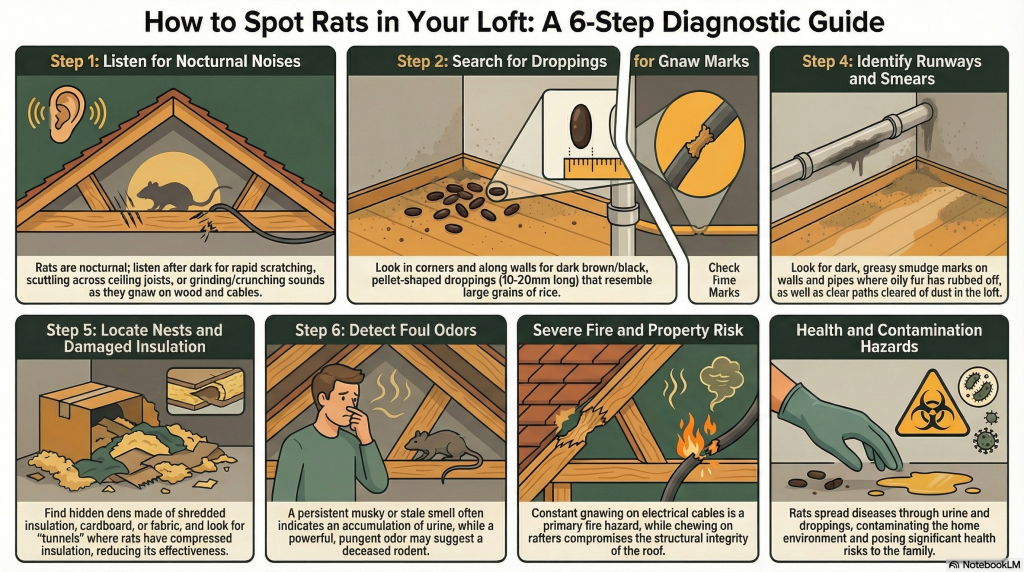
1. What’s That Noise? Unexplained Sounds from Above
This is often the first and most obvious indicator. Rats are nocturnal, so you’ll typically hear them moving around after dark.
- Scratching and Scuttling: Listen for light, rapid scratching, especially near walls or in corners. You might also hear them scuttling across ceiling joists.
- Gnawing Sounds: Rats constantly gnaw to keep their incisors sharp. You could detect crunching or grinding noises as they chew on wood, plastic, or even electrical cables. This is a serious fire hazard.
- Squeaking: While less common, young rats or larger infestations might produce faint squeaking sounds.
2. Droppings: The Unmistakable Trail of an Infestation
Rat droppings are a definitive sign. You’ll likely discover them in corners, along walls, or near entry points.
- Appearance: Typically dark brown or black, elongated, and pellet-shaped, resembling large grains of rice (around 10-20mm long).
- Quantity: A significant number of droppings indicates an established and active infestation. Fresh droppings are soft and moist, while older ones are dry and crumbly.
- Location: Check along joists, insulation, stored items, and anywhere they might congregate.
3. Gnaw Marks: Evidence of Destructive Chewing
Rats constantly gnaw on materials to wear down their ever-growing teeth. They will chew on anything from wood and plastic to electrical wiring and insulation.
- Location: Look for irregular chew marks on wooden beams, rafters, PVC pipes, storage boxes, and especially electrical cables.
- Appearance: Gnaw marks are usually paired grooves, around 1-4mm wide, often found in difficult-to-reach areas. You might see shredded insulation where they’ve created nests.
4. Visible Runways and Grease Smears
Rats are creatures of habit and often use the same paths repeatedly.
- Grease Marks: As rats travel, the oil and dirt from their fur leave greasy smears along walls, pipes, and beams. These appear as dark, smudged marks, particularly where they squeeze through tight spaces.
- Well-Worn Paths: In dusty areas of your loft, you might observe clear, narrow pathways (runways) where their constant movement has cleared the dust.
5. Nests and Damaged Insulation
Rats build nests for shelter and breeding, often tearing up materials available in your loft.
- Nesting Material: Look for shredded insulation, cardboard, fabric, or paper gathered into a small, hidden den.
- Damage to Insulation: Rats will tunnel through and compress insulation, significantly reducing its effectiveness and increasing your energy bills.
6. A Persistent, Stale Odour
A strong, musky, or stale smell in your loft can point to a rodent problem.
- Urine and Droppings: The accumulation of rat urine and droppings creates a distinct, unpleasant odour.
- Deceased Rodents: In severe cases, you might detect the powerful smell of a dead rat, indicating a long-term infestation.
Why You Must Act Quickly if You Spot Rats in Your Loft
Ignoring rats in your loft is never a good idea. Not only do they cause extensive damage to property by gnawing through structures and wiring (a serious fire risk!), but they also spread diseases. Contamination from their droppings and urine can pose significant health risks to your family.
Do you suspect rats have made themselves at home in your loft? Don’t wait for the problem to escalate.
Find a local, professional pest controller in your area today to quickly and effectively remove these unwanted guests.
Click here to search our directory for qualified rat removal experts near you.
- Flea Treatment Cost Liverpool | North West Pest Finder
- Pest Control Contracts for Private Houses | Ongoing Pest Protection for Homes in the North West
- Bed Bug Treatment Blackpool | Professional Heat & Chemical Treatment | Northwest Pest Finder
- The Whiston Squirrel Break-In: When a “Noise in the Loft” Ends Up in the Toilet
- Emergency Specialist Cleaning & Sanitization Services Manchester